First mother went away. Then it was our father, twitching from under our feet the rugs, which formed, he said, a valuable collection. We were alone for a little then. Not really alone, of course, for there was Fraulein Hoffman, and Mademoiselle Leblanc, and Kyria Smaragda our housekeeper, and Eurydice the cook, and the two maids from Lesbos. The house was full of the whispering of women, and all of us felt melancholy.
Then it was explained to us by Mademoiselle Leblanc that she and Fräulein Hoffman had gone out and sent a telegram to Smyrna, and soon the aunts would arrive in Egypt. Soon they did: there was our Aunt Ourania, who was less stern than she seemed to be, and Aunt Thalia—she was the artistic one—nobody, said Fräulein Hoffman, could sing the German Lieder with such Gefühl.
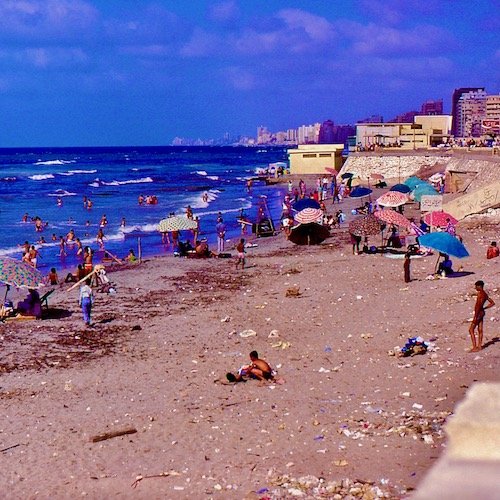
Soon the house began to live again. There were always people on the stairs. There was a coming and going, and music, in the old house at Schutz. That year my eldest sister Phrosso thought she was in love with an Italian athlete, and my brother Aleko decided he would become a film star. The girls from Lesbos hung out of the upper windows after the dishes had been stacked, and tried to reach the dates which were ripening on the palms. Sometimes there was the sound of dates plopping in the damp garden below. The garden was never so cool and damp as when they brought us back from the beach. The gate creaked, as the governesses let us in through the sand-coloured wall, into the dark-green thicket of leaves.
My eldest sister Phrosso said it was awful, awful—mouldy Alexandria if only they would let her wear high heels, or take us to Europe, if only she could have a passionate love affair; otherwise, she was going to burst. But it did not occur to me that our life was by any means insufferable. Though I was different. I was the sensible one, said the aunts; Dionysios is a steady boy. Sometimes I felt this bitterly, but I could not alter, and almost always I derived an immense pleasure from the continuous activity of the house: my second sister Agni writing essays at the oval table; the two little ones giving way to tempers; the maids explaining dreams in the attics; and at evening our Aunt Thalia playing the piano in the big salon with the gilded mirrors—her interpretation of Schumann was not equalled by that of Frau Klara herself, Fräulein Hoffman said, not that she had been there. Our aunt was very satisfied. She crossed her wrists more than ever. She sang une petite chanson spirituelle de votre Duparc to please Mademoiselle Leblanc, who sat and smiled above her darning-egg. I believe we were at our happiest in the evenings of those days. Though somebody might open a door, threatening to dash the light from the candles on our aunt’s piano, the flames soon recovered their shape. Silences were silenter. In those days, it was not uncommon to hear the sound of a camel, treading past, through the dust. There was the smell of camel on the evening air.
Oh yes, we were at our happiest. If my sister Phrosso said it was all awful, awful, it was because she had caught sight of the Italian athlete at the beach, and life had become painful for her.
That year the Stavrides came to live in the house almost opposite.
‘Do you know,’ I informed Aunt Ourania, ‘these Stavrides are from Smyrna? Eurydice heard it from their cook.’
‘Yes, I know,’ our aunt replied rather gravely. ‘But I do not care for little boys, Dionysi mou, to spend so much time in the kitchen.’
It hurt me when our aunt spoke like this, because more than any of us I was hers. But I always pretended not to have heard.
‘Did you know them?’ I had to ask. ‘These Stavrides, Aunt Ourania?’
‘I cannot say I did not know them,’ Aunt Ourania now replied. ‘Oh, yes,’ she said, ‘I knew them.’
It seemed to me that Aunt Ourania was looking her sternest, but as always on such a transformation, she began to fiddle with my tunic, to stroke my hair.
‘Then, shall we know them, too, Aunt Ourania? There is one child, Eurydice says. A little girl. Titina.’
But our Aunt Ourania grew sterner still.
‘I have not decided,’ she said at last, ‘how far we shall commit ourselves. The Stavrides,’ she said, clearing her throat, ‘are not altogether desirable.’
‘How?’ I asked.
‘Well,’ she said, ‘it is difficult to put.’
She went on stroking the short stubble of my cropped hair.
‘Kyria Stavridi, you see, was the daughter of a chemist. They even lived above her father’s shop. It is not that I have anything against Kyria Stavridi,’ she thought to add. ‘For all I know, she may be an excellent person by different standards. But we must draw the line. Somewhere. Today.’
Then my Aunt Ourania looked away. She was herself such a very good person. She read Goethe every morning, for a quarter of an hour, before her coffee. She kept the Lenten fasts. Very soon after her arrival, she had ordered the hair to be shorn from the heads of all us boys. We were to wear the tunics of ordinary working-class children, because, she said, it was wrong to flaunt ourselves, to pretend we were any different. She herself wore her hair like a man, and gave away her money in secret.
‘Still,’ my Aunt Ourania said, ‘there is no reason why you children should not be kind to Titina Stavridi, even if her parents are undesirable.
‘Her eyes had moistened, because she was so tender.
‘You, Dionysi,’ she said, ‘you are the kindest. You must be particularly kind to poor Titina.’
For the present, however, nothing further happened.
Our life continued. After the departure of our parents, you could not say anything momentous took place. There were always the minor events, and visits. Our Aunt Calliope, the professor, came from Paris. She made us compose essays, and breathe deep. My brother Aleko wrote for a course on hypnotism; Phrosso forgot her athlete, and began to notice a Rumanian; my second sister Agni won her prize for algebra; and the little ones, Myrto and Paul, each started a money-box. With so many unimportant, yet necessary things taking place all the time, it did not occur to me to refer again to the Stavrides. Or perhaps it did cross my mind, and I made no mention of them, because our Aunt Ourania would not have wished it. So the days continued more or less unbroken: the sun working at the street wall; the sea-water salting our skins; the leaves of the ficus sweating in the damp evenings of the old house at Schutz.
When, suddenly, on a Tuesday afternoon, there was Kyria Stavridi herself sitting in Aunt Ourania’s favourite chair beside the big window in the salon.
‘Which one are you, then?’ Kyria Stavridi called, showing an awful lot of gold.
‘I am the middle one,’ I replied. ‘I am Dionysios.’
In ordinary circumstances I would have gone away, but now I was fascinated by all that gold.
‘Ah,’ Kyria Stavridi said, and smiled, ‘often it is the middle ones on whom the responsibilities fall.’
It made her somewhat mysterious. She was dressed, besides, in black, and gave the impression, even at a distance of several feet, of being enclosed in a film of steam.
I did not answer Kyria Stavridi, because I did not know what to say, and because I had noticed she was not alone.
‘This is my little girl, Titina,’ Kyria Stavridi said. ‘Will you be kind to her?’
‘Oh,’ I said. ‘Yes.’
Looking at the unknown child.
Titina Stavridi was standing at her mother’s elbow. All in frills. All in white. Wherever she was not stuck with pink satin bows. Now she smiled, out of her oblong face. Some of the teeth appeared to be missing from Titina’s smile. She had that banana-coloured skin, those rather pale, large freckles, the paler skin round the edges of the hair, which suggested to me, I don’t know why, that Titina Stavridi might be a child who had long continued to wet the bed.
Just then my Aunt Ourania came into the room, to which our maid Aphrodite had called her. She put on her man’s voice, and said:
‘Well, Kyria Stavridi, who would have expected to see you in Alexandria!’
Holding out her hand from a distance.
Kyria Stavridi, who had got to her feet, began to steam more than ever. She was exceptionally broad in her behind. Kyria Stavridi was bent almost double as she touched my aunt’s fingers.
‘Ah, Mademoiselle Ourania, such a pleasure!’ Kyria Stavridi was bringing it out by the yard. ‘To renew acquaintance! And Mademoiselle Thalia? So distinguished!’
Aunt Ourania, I could see, did not know how to reply.
‘My sister,’ she said, finally, ‘cannot come down. She is suffering from a headache.’
And Kyria Stavridi could not sympathise enough. Her breath came out in short, agonised rushes.
After that, they spoke about people, which was always boring.
‘Dionysi,’ my aunt said, during a pause, ‘why don’t you take Titina into the garden? Here there is really nothing for children.’
But I did not move. And my aunt did not bother again.
As for Titina Stavridi, she might have been a statue, but an ugly one. Her legs seemed so very thick and lifeless. All those bows. And frilly pants. By moving closer I could see she had a kind of little pock-mark on the side of her lumpy, freckled nose, and her eyes were a shamefully stupid blue.
‘My husband,’ Kyria Stavridi was saying, ‘my husband, too,’ she murmured, ‘does not enjoy the best of health.’
‘Yes,’ said my Aunt Ourania, ‘I remember.’
Which somehow made her visitor sad.
Then all the others were pushing and rushing, even Phrosso and Aleko, the two eldest, all entering to see this Kyria Stavridi from Smyrna, and her ugly child. Everybody was introduced.
‘Then I hope we shall be friends,’ Kyria Stavridi suggested, more to us children, because it was obvious even to me that her hopes of our aunts were not very high. ‘Dionysios,’ said Kyria Stavridi, ‘will be, I feel, Titina’s little friend. He has promised me, in fact. They must be the same age, besides.’
This made my sister Agni laugh, and Aleko gave me a pinch from behind. But my little brother Paul, who was never in two minds about anything, went straight up to Titina, and undid one of her satin bows. For a moment I thought Titina Stavridi would begin to cry. But she did not. She smiled and smiled. And was still smiling when her mother, who had said all the necessary things, presently led her out.
Then we were all laughing and shouting.
‘So that was Kyria Stavridi!’ my sister Phrosso shouted. ‘Did you notice the gap between her front teeth?’
‘And the bows on her dreadful Titina!’ Agni remarked. ‘You could dress a bride in all that satin!’
‘Do we have to know such very vulgar people?’ asked my brother Aleko.
Then our Aunt Ourania replied:
‘You are the one who is vulgar, Aleko.’
And slapped him in the face.
‘Aleko, you will go to your room.’
This might have shocked us more, Aleko the eldest, already so strong, if Myrto—she was the quiet one who noticed things—had not begun to point and shriek.
‘Look! Look!’ Myrto shouted. ‘Titina Stavridi has done it on the floor!’
There, in fact, beside the best chair, was Titina’s pool. As if she had been an untrained dog.
At once everyone was pushing to see.
‘Such a big girl!’ Aunt Ourania sighed.
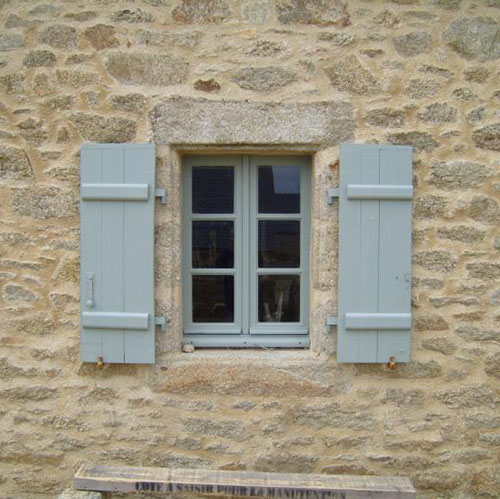
She rang for Aphrodite, who called to the Arab, who brought a pail.
After that I began to suspect everybody in our house had forgotten the Stavrides. Certainly the two girls from Lesbos had seen the Kyrios Stavridis singing and stumbling at the end of the street. He had put his foot through his straw hat. But nothing was done about Titina, until one hot evening as I searched the garden with a candle, looking for insects for a collection I was about to make, Aunt Ourania called me and said:
‘Tomorrow we must do something about Titina. You, Dionysi, shall fetch her.’
Several of the others groaned, and our Aunt Thalia, who was playing Schumann in her loveliest dress, of embroidered purple, hunched her shoulders.
‘Oh!’ I cried. ‘I?’
But I knew, and my aunt confirmed, it could not have been otherwise. It was I who must be the steadiest, the kindest. Even Kyria Stavridi had said that responsibilities often fell to the middle ones.
On the following afternoon I fetched Titina. We did not speak. But Kyria Stavridi kissed me, and left a wet patch on my cheek.
We were going to the beach, on that, as on almost any other afternoon.
‘Oh!’ moaned my sister Phrosso. ‘The old beach! It is so boring!’
And gave Titina a hard pinch.
‘What, Titina,’ asked Agni, ‘is that?’
For Titina was wearing a blue bead.
‘That is to keep away the Eye,’ said Titina.
‘The Eye!’
How they shouted.
‘Like an Arab!’ cried Myrto.
And we began to chant: ‘Titina, Titina, Arapina … ‘ but softly, almost under our breath, in case Mademoiselle should hear.
So Titina came to the beach, on that and other afternoons. Once we took off her pants, and beat her bottom with an empty bottle we found floating in the sea. Then, as always, Titina only smiled, rather watery certainly. We ducked her, and she came up breathless, blinking the sea out of those very stupid, deep blue eyes. When it was wet, her freckly skin shone like a fish’s.
‘Disgusting!’ Phrosso decided, and went away to read a magazine.
You could not torture Titina for long; it became too uninteresting.
But Titina stuck. She stuck to me. It was as if Titina had been told. And once in the garden of our house at Schutz, after showing her my collection of insects, I became desperate. I took Titina’s blue bead, and stuck it up her left nostril.
‘Titina,’ I cried, ‘the holes of your nose are so big I’d expect to see your brain—if you had any,’ I shouted, ‘inside.’
But Titina Stavridi only smiled, and sneezed the bead into her hand.
In my desperation I continued to shout pure nonsense.
Until my Aunt Thalia came out.
‘Wretched, wretched children!’ she called. ‘And you! Dionysi!’
During the heat of the afternoon my aunt would recline in a quiet room, nibbling a raw carrot, and copying passages from R. Tagore.
‘My headache!’ she now protested. ‘My rest destroyed! Oh, my God! My conjunctivitis!’
On account of the conjunctivitis Aunt Thalia was wearing her bottle-green eye-shade, which made her appear especially tragic. Altogether Aunt Thalia was like a masked figure in a tragedy.
So that I was shocked, and Titina Stavridi even more so.
On the next occasion when I fetched her, her mother took me aside and instructed me in detail.
‘Your poor Aunt Thalia!’ She sighed. ‘Night and morning,’ she made me repeat. ‘Bathe the eyes. Undiluted.’
‘What is this bottle you have brought me?’ asked Aunt Thalia when I presented it.
She was standing in the big salon, and the sleeves fell back from her rather thin, but elegant arms.
‘It is for the conjunctivitis.’
‘Yes! Yes! But what is it?’
Aunt Thalia could grow so impatient.
‘It is a baby’s water,’ I replied. ‘Night and morning. Undiluted.’
‘Oh! Oh!’ moaned our Aunt Thalia as she flung the bottle.
It bounced once on the polished floor.
‘Disgusting, disgusting creature!’
‘It’s probably a very clean baby,’ I said.
It sounded reasonable, but Aunt Thalia was not consoled.
Nor did I fetch Titina again. I must say that, even without the episode of Kyria Stavridi’s prescription, we should not have been allowed to see Titina. For the Stavrides were always becoming involved in what our aunts considered undignified, not to say repulsive, incidents. For instance, Kyria Stavridi was butted in her broad behind by a piebald goat in the middle of the Rue Goussio. Then there was the thing that happened in our own street as Despo and Aphrodite, the maids from Lesbos, were returning home at dusk. The two girls were panting and giggling when they arrived. We could hear them already as they slammed the gate. What was it, Despo, Aphrodite? we called, running. It was to do with the Kyrios Stavridis, we gathered, who had shown them something in the almost dark. Long afterwards it was a matter for conjecture what the Kyrios Stavridis had shown our maids, though our sister Phrosso insisted from the beginning that she knew.
In any case, Titina Stavridi withdrew from our lives, to a distance of windows, or balconies.
Once, indeed, I met her outside the grocer’s, when Titina said:
‘It is sad, Dionysi. You were the one. You were the one I always loved.’
So that I experienced a sensation of extreme horror, not to say terror, and ran all the way home with the paperful of sugar for which Kyria Smaragda had sent me.
But I could not escape Titina’s face. Its dreadful oblong loomed in memory and at open windows, at dusk especially, as the ripening dates fell from their palms, and a camel grunted past.
. . .
So much happened all at once I cannot remember when the Stavrides went away. For we, too, were going. Our Aunt Ourania had paused one evening in doing the accounts, and said it was time to give serious thought to education. So there we were. Packing. Fräulein Hoffman began to cry.
Once I did happen to remark:
‘Do you suppose the Stavrides have left already? One sees only shutters.’
‘That could be,’ said Aunt Ourania.
And Aunt Thalia added: the Stavrides were famous for moving on.
Anyway, it was unimportant. So many events and faces crowded into the next few years. For we had become Athenians. In the dry, white, merciless light, it was very soon recognised that I was a conscientious, though backward boy. Time was passing, moustaches growing. Often we children were put to shame by the clothes our Aunt Ourania would make us wear, for economy, and to contain our pride.
Most of the other boys had begun to think of going to brothels. Some of them had already been. Their moustaches helped them to it. But I, I mooned about the streets. Once I wrote on a wall with an end of chalk:
I LOVE I LOVE I LOVE
And then went off home. And lay on my empty bed. Listening. The nights were never stained with answers.
It was soon the year of the Catastrophe. We moved to the apartment at Patissia then. So as to have the wherewithal to help some of those poor people, our Aunt Ourania explained. For soon the refugees were pouring in from Anatolia. There were cousins sleeping on the tiled floors, and our Aunt Helen and Uncle Constantine in the maids’ bedroom; the girls from Lesbos had to be dismissed. Give, give, ordained Aunt Ourania, standing with her arms full of cast-off clothes. My youngest sister Myrto burst into tears. She broke open her money-box with a hammer, and began to spend the money on ices.
Oh, everything was happening at this time. Our eldest brother, who had given up all thought of becoming a film star, was in Cairo being a business man. Our sister Phrosso had stopped falling in love. She was again in Alexandria, trying for one of several possible husbands. There were the many letters, which filled me with an intolerable longing for damp gardens and ficus leaves. Once I even wrote a poem, but I showed it to no one, and tore it up. It was sometimes sad at home, though Agni might sit down at the piano, and bash out Un baiser, un baiser, pas sur la bouche … while the aunts were paying calls.
Then it was decided—it was our Aunt Ourania who decided things—that as Dionysios was an unexceptional, but reliable boy, he should leave school, and go to our Uncle Stepho at the Bank. Then there would be so much more to give to those poor people, the refugees from the Turks in Anatolia. It was exciting enough, but only for a little. Soon I was addressing envelopes at the Bank. The dry ledgers made me sneeze. And my Uncle Stepho would send for me, and twist my ear, thinking it a huge joke to have me to torture at the Bank.
So it was.
. . .
Summer had come round again: the eternal, powdery, white Athenian summer. The dust shot out from under my shoes as I trudged along Stadium Street, for although I had intended to spend my holiday at Pelion, Aunt Ourania had at once suggested: will your conscience allow you, with all those refugees sleeping on mattresses in the hall? So I had stayed, and it was intolerable. My clothes were damp rags by eleven o’clock in Stadium Street.
When I heard my name.
‘Dionysi! Dionysi?’
It was a young woman. Or girl. Or girl. Who sprang from one of those little marble tables, where she had been eating a water-ice, on the pavement, at Yannaki’s.
‘Oh,’ she continued, ‘I thought. I thought it was some one. Dionysios Papapandelidis. Somebody I used to know.’
I must have looked so stupid, I had caused this cool, glittering girl to doubt and mumble. She stood sucking in her lips as though to test to what extent her lipstick had been damaged by the ice.
When suddenly I saw, buried deep inside the shell, the remains, something of the pale, oblong face of the child Titina we had known at Schutz.
My surprise must have come pouring out, for at once she was all cries and laughter. She was breathing on me, embracing even, kissing the wretched beginnings of my thin moustache, there in the glare of Stadium Street. I had never felt so idiotic.
‘Come,’ Titina said at last. ‘We must eat an ice. I have already had several. But Yannaki’s ices are so good.’
I sat with Titina, but was nervous, for fear I might have to pay for all those previous ices.
But Titina almost immediately said:
‘I shall invite you, dear Dionysi.’
She was so glad. She was so kind. The curious part of it was: as Titina fished in her bag for a cigarette, and fiddled with the stunning little English lighter, and a ball of incalculable notes fell out on the marble table-top, I had become the awkward thing of flesh Titina Stavridi used to be.
‘Tell me!’ she begged; and: ‘Tell me!’
Dragging on the cigarette, with her rather full, practised lips.
But I, I had nothing to tell.
‘And you?’ I asked. ‘Do you live in Athens?’
‘Oh, no!’ She shook her head. ‘Never in Athens!’
This goddess was helmetted only in her own hair, black, so black, the lights in it were blue.
‘No,’ she said. ‘I am here on a short visit. Jean-Louis,’ she explained, ‘is an exceptionally kind and generous man.’
‘Jean-Louis?’
‘That is my friend,’ Titina answered, shaping her mouth in such a way I knew my aunts would have thought it common.
‘This person, is he old or young?’
‘Well,’ she said, ‘he is mature.’
‘Does your mother know?’
‘Oh, Mother! Mother is very satisfied things have arranged themselves so well. She has her own apartment, too. If this is the world, then live in it. That is what Mother has decided.’
‘And your father?’
‘Papa is always there,’ Titina said, and sighed.
As for myself, I began to fill with desperate longing. Here was Titina, so kind, so close, so skilled, so unimaginable. My clothes tightened on me as I sat.
And Titina talked. All the time her little bracelets thrilled and tinkled. She would turn her eyes this way and that, admiring, or rejecting. She would narrow her eyes in a peculiar way, though perhaps it was simply due to the glare.
‘Tell me, Dionysi,’ she asked, and I experienced the little hairs barely visible on her forearm, ‘have you ever thought of me? I expect not. I was so horrible! Awful! And you were always so very kind.’
The fact was: Titina Stavridi did sincerely believe in her own words, for she had turned upon me her exquisitely contrived face, and I could see at the bottom of her candid eyes, blue as only the Saronic Gulf, I could see, well, I could see the truth.
‘There is always so little time,’ complained Titina, both practical and sad. ‘Dionysi, are you free? Are you free, say, this afternoon? To take me to the sea? To swim?’
‘But this is Greece,’ I said, ‘where men and girls have not yet learnt to swim together.’
‘Pah!’ she cried. ‘They will learn! You and I,’ she said, ‘will swim together. If you are free. This afternoon.’
And at once time was our private toy. We were laughing and joking expertly as Titina Stavridi pared away the notes, to pay for all those ices we had eaten at Yannaki’s.
‘First I have an appointment,’ she announced.
‘With whom?’ I asked.
I could not bear it.
‘Ah!’ She laughed. ‘With a friend of my mother’s. An elderly lady, who has a wart.’
So I was comforted. There were youvarlakia for lunch. Nobody could equal Eurydice at youvarlakia, but today, it seemed, sawdust had got into them.
‘You will offend Eurydice,’ Aunt Thalia had begun to moan. ‘You have left her youvarlakia.’
I decided not to tell my two, dear, stuffy aunts of my meeting with Titina Stavridi.
It became the most unbearable secret, and to pass the time—to say nothing of the fact that I should probably have to pay Titina’s fare on the rather long journey by bus.
‘Oh, no,’ she was saying at last, there on the steps of the Grande Bretagne. ‘Call a taxi,’ Titina insisted, which the man in livery did.
‘Money is for spending,’ she explained.
On the way, as she rootled after the lovely little lighter, I was relieved to see her bag was still stuffed with notes.
For the afternoon she was wearing a bracelet of transparent shells, which jostled together light as walnuts.
‘That,’ Titina said, ‘is nothing.’
‘My friend,’ she added, ‘advised me to leave my jewels in a safe deposit at the Crédit Lyonnais. One never knows, Jean-Louis says, what may happen in Greece.’
I agreed that the Crédit Lyonnais offered greater certainty.
It was like that all the way. As her body cannoned off me, as lightly as her bracelet of shells, Titina revealed a life of sumptuous, yet practical behaviour. She accepted splendour as she did her skin. All along the beach, that rather gritty Attic sand, Titina radiated splendour, in godlike armour of nacreous scales, in her little helmet of rubber feathers.
‘Do you like my costume?’ she asked, after she had done her mouth. ‘Jean-Louis does not. Ça me donne un air de putain. So he says.’
At once she ran down into the sea, shimmering in her gorgeous scales. I was glad to find myself inside the water.
Then we swam, in long sweeps of silvery-blue. Bubbles of joy seemed to cling to Titina’s lips. Her eyes were the deeper, drowsier, for immersion.
I had asked the taxi to drop us at a certain bay along that still deserted coast. The shore was strewn with earth-coloured rocks. The Attic pines straggled, and struggled, and leaned out over the sea. It was a poor landscape, splendid, too, in its own way, of perfectly fulfilled austerity. I had hoped we should remain unseen. And so we were. Until a party of lads descended half-naked on the rocks. Several of them I had sat beside in school. Now they seated themselves, lips drooping, eyes fixed. They shouted the things one expected. Some of them threw handfuls of water.
But Titina squinted at the sun.
Faced with these gangling louts, of deferred muscle and blubber-lips, anything oafish in myself seemed to have been spent. Was it Titina’s presence? My head, set firmly on my neck, had surveyed oceans and continents. I had grown suave, compact, my glistening moustache had thickened, if not to the human eye.
Presently some of the boys I knew plunged in, and were swimming around, calling and laughing in their cracked voices. Their seal-like antics were intended to amuse.
But Titina did not see.
Then, as we were standing in the shallows, squat, yellow Sotiri Papadopoulos attempted to swim between Titina’s legs.
‘Go away, filthy little boy!’
How she pointed!
Titina’s scorn succeeded. Sotiri went. Fortunately. He had often proved himself stronger than I.
Afterwards I sat with Titina, dripping water, under the pines. She told me distantly of the visits to Deauville, Le Touquet, and Cannes. Reservations at the best hotels. I was only lazily impressed. But how immaculate she was. I remembered Agni, her goosey arms, and strings of wet, swinging hair.
Titina produced fruits glacés.
‘We brought them, Jean-Louis and I, from the Côte d’Azur. Take them,’ she ordered.
First I offered her the box.
‘Ach!’ she said. ‘Eat! I am sick of them. The fruits glacés!’
So I sat and stuffed.
For a long time we remained together beneath the pines, she so cool and flawless, myself only hot and clammy. She began to sing—what, I really cannot remember.
‘Ah,’ she exclaimed, lying back, looking up through the branches, ‘they are stunted, our poor pines.’
‘That is their way,’ I told her.
‘Yes.’ She sighed. ‘They are not stunted.’
I walked a short distance, and brought her vissinada from a roadside booth. We stained our mouths with the purple vissinada. All along the Saronic Gulf the evening had begun to purple. The sand was gritty to the flesh. I believe it was at this point the man with the accordion passed by, playing his five or six notes, as gentle and persuasive as wood-pigeons. Unlike the boys earlier, the man with the accordion did not stare. He strolled. I think probably the man was blind.
‘Ach, Titina! Titina!’
I was breathing my desperation on her.
The darkness was plunging towards us as Titina Stavridi turned her face towards me on the sand. A twig had marked her perfect cheek. She lay looking into me, as though for something she would not find.
‘Poor Dionysaki,’ she said, ‘at least it is unnecessary to be afraid.’
So that I had never felt stronger. As I wrestled with Titina Stavridi on the sand, my arms were turned to sea-serpents. The scales of her nacreous maillot, which Jean-Louis had never cared for, were sloughed in a moment by my skilful touch. I was holding in my hands her small, but persistent buttocks, which had been threatening to escape all that afternoon.
‘Ach!’ she cried, in almost bitter rage, as we heard her teeth strike on mine.
Afterwards Titina remained infinitely kind. The whole darkness was moving with her kindness.
‘When will you leave?’ I dreaded to ask.
‘The day after tomorrow,’ she replied. ‘No,’ she corrected, quick. ‘Tomorrow.’
‘Then why did you say: after tomorrow?’
‘Because,’ she said, simply, ‘I forgot.’
So my sentence was sealed. All the sea sounds of Attica rose to attack me, as I thrust my lips all over again into Titina’s wilted mouth.
‘Good-bye, Titina,’ I said, on the steps of her hotel.
‘Good-bye, Dionysi. Dionysaki!’
She was so tender, so kind.
But I did not say anything else, as I had begun to understand already that such remarks are idiocy.
All the way to Patissia, the dust was thick and heavy on my shoes.
When I got in, my Aunt Calliope, the professor, had arrived from Paris.
‘Our Dionysi!’ cried Aunt Calliope. ‘Almost a man!’
She embraced me quickly, in order to return to politics.
We had never cared for Aunt Calliope, who had made us write essays and things, though her brothers loved her, and would quarrel with her till the white hours over any boring political issue.
‘The Catastrophe,’ my Aunt Calliope had reached the shouting stage, ‘was the result of public apathy in one of the most backward countries of the world.’
My Uncle Stepho was shouting back.
‘Hand it over to you and your progressive intellectuals, and we might as well, all, decent people, anyway, cut our throats!’ bellowed Uncle Stepho, Vice-President of our Whole Bank.
‘But let us stick to the Catastrophe!’
‘The Generals were to blame!’ screamed my Uncle Constantine.
‘All Royalists! Royalists!’
Aunt Calliope was beating with her fists.
‘What can one expect of effete Republicans? Nothing further!’
‘Do not blame the Republicans!’ Aunt Ourania dared anyone.
‘The Royalists have not yet proved themselves.’
Aunt Calliope started to cackle unmercifully.
‘Better the Devil,’ thought Constantine.
Aunt Ourania frowned.
‘Still, Kosta,’ she suggested, very gravely, in the voice she adopted for all soothing purposes, ‘you must admit that when blood flows our poor Greece is regenerated.’
My Aunt Thalia, who had been crying, went to the piano. She began to playa piece I remembered. Sweet and sticky, the music flowed from under her always rather tentative hands.
The music gummed the voices up.
Then my Aunt Calliope remarked:
‘Guess whom I saw?’
Nobody did.
‘That little thing, that Titina Stavridi, to whom you were all so kind in the old days at Schutz.’
‘Living in Athens?’ asked Aunt Ourania, though the answer must remain unimportant.
‘Not a bit of it,’ Aunt Calliope said. ‘I have run into her before. Oh, yes, several times. In Paris.’ Here Aunt Calliope laughed. ‘A proper little thing! A little whore!’
It was obvious from her expression that Aunt Ourania was taking it upon herself to expiate the sins of the world, while Aunt Thalia forced the music. How it flowed, past the uncles and out of the room, all along the passages of our shrunken apartment, which seldom nowadays lost its smell of pasta. The intolerable Schumann pursued me as far as my own room, and farther.
Outside, the lilac-bushes were turned solid in the moonlight. The white music of that dusty night was frozen in the parks and gardens. As I leaned out of the window, and held up my throat to receive the knife, nothing happened. Only my Aunt Thalia continued playing Schumann, and I realized that my extended throat was itself a stiff sword.
…
Image: Bernard DUPONT
CC-BY-SA-2.0/Wikimedia Commons